

Get notified
Shinseiki Pear Tree Information and Care
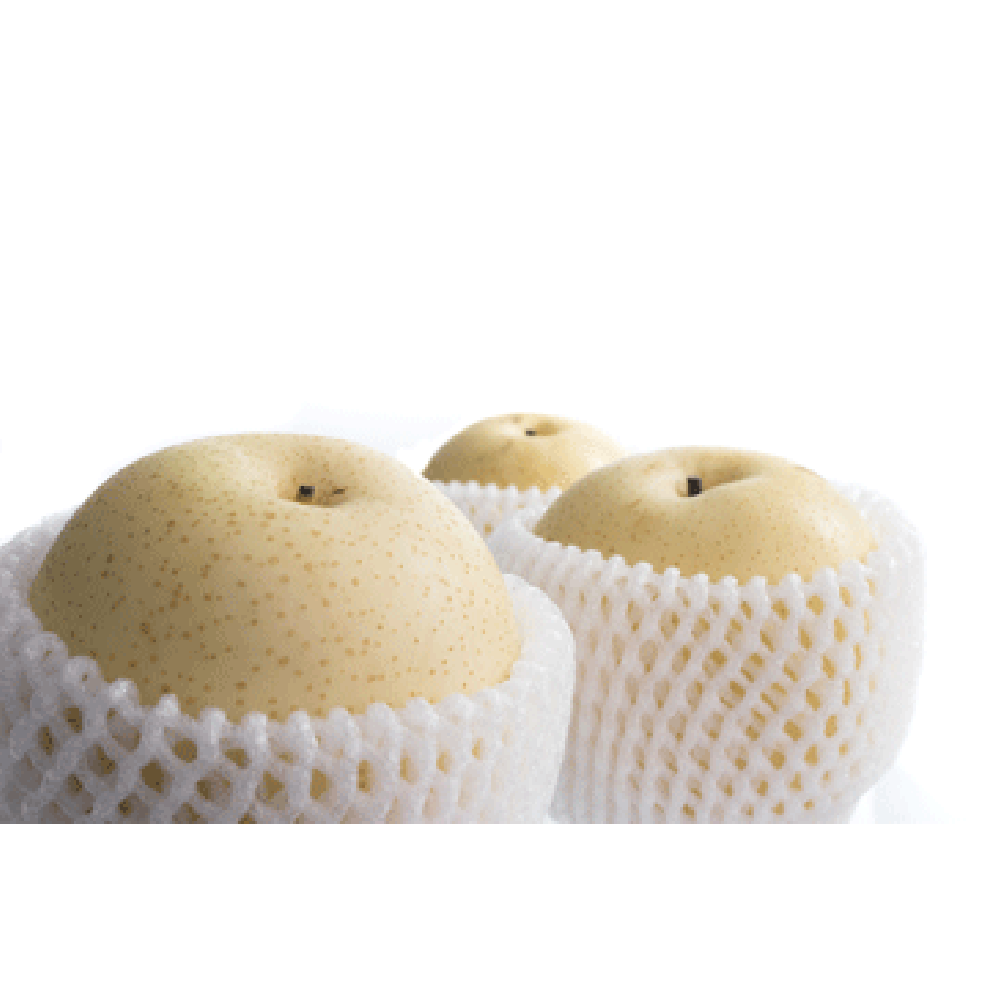
The Shinseiki Pear tree (Pyrus) is a woody deciduous tree. It produces tiny white blossoms in the Spring and pomaceous fruit in the Summer. Plant in the full sun or partial shade. Find a good location with soil that drains well. Use high-quality planting mix and fertilizer and provide good spacing. The Bartlett Pear tree is easy to grow.
Tree Size - How To Trim and Much Space To Provide
At home orchards, many keep Shinseiki Pear trees less than 10 feet wide and tall. However, trees can grow over 20 feet tall and wide. Prune trees in the Winter and provide Summer thinning to keep trees at a desired size.
Pruning and Thinning
Cut the tip of the tree to reduce the height and promote side branches to grow. Remove any dry twigs or growth below the main branches and graft. Prune off any branches crossing towards the center of the tree or far inside the tree where the little light will reach.
Watering Pear Trees – How Much and How Often
Pear trees thrive with deep, but infrequent irrigation water. Begin to water newly planted trees weekly once the tree leaves out in the early Spring. Increase the frequency as the weather warms up in the Spring to Summer. It’s normal to water 3 times per week during Summer heat waves in sandy loam soils. Reduce the frequency as temperatures reduce in the Fall. Discontinue watering in the Winter while the tree is dormant.
Fertilizing Pear Trees – How to Feed a Pear Tree
Fertilize your Shinseiki Pear tree with organic fruit tree fertilizer. Use bone meal and humus based conditioners in the Winter. The low nitrogen, but higher phosphorus and potassium fertilizer with 1-2-2 or 1-4-4 NPK ratio will promote Spring blossoms and fruit development.
Apply higher nitrogen fertilizers such as steer manure and blood meal or feeds where the NPK ratio is 2-1-1 or 3-1-2 in early Spring for good growth through the Summer. Do not fertilize in the Fall, since we do not want to push growth during this time. Growth during the Fall would be weak and lanky. Use high quality trusted materials so the contents are known. If using compost, apply it sparsely during the early Spring while the weather is cool.
Pear Pests Management
Use organic horticultural oils such as Neem oil during the Winter to reduce and prevent soft-bodied Spring insects.
Step One:
Soil and Planting: Plant in soil that drains well. Dig a hole that is as deep as the tree’s roots and at least twice as wide.
Step Two:
Place the tree in the hole and backfill around the plant’s roots with a mixture of the native soil and high-quality planting mix that has washed sand and organic fertilizer.
Step Three:
Create a basin around the roots drip zone so that water collects. Water deeply until the roots and nearby soil is saturated and reaches field capacity.