

Get notified
Panamint Nectarine Tree
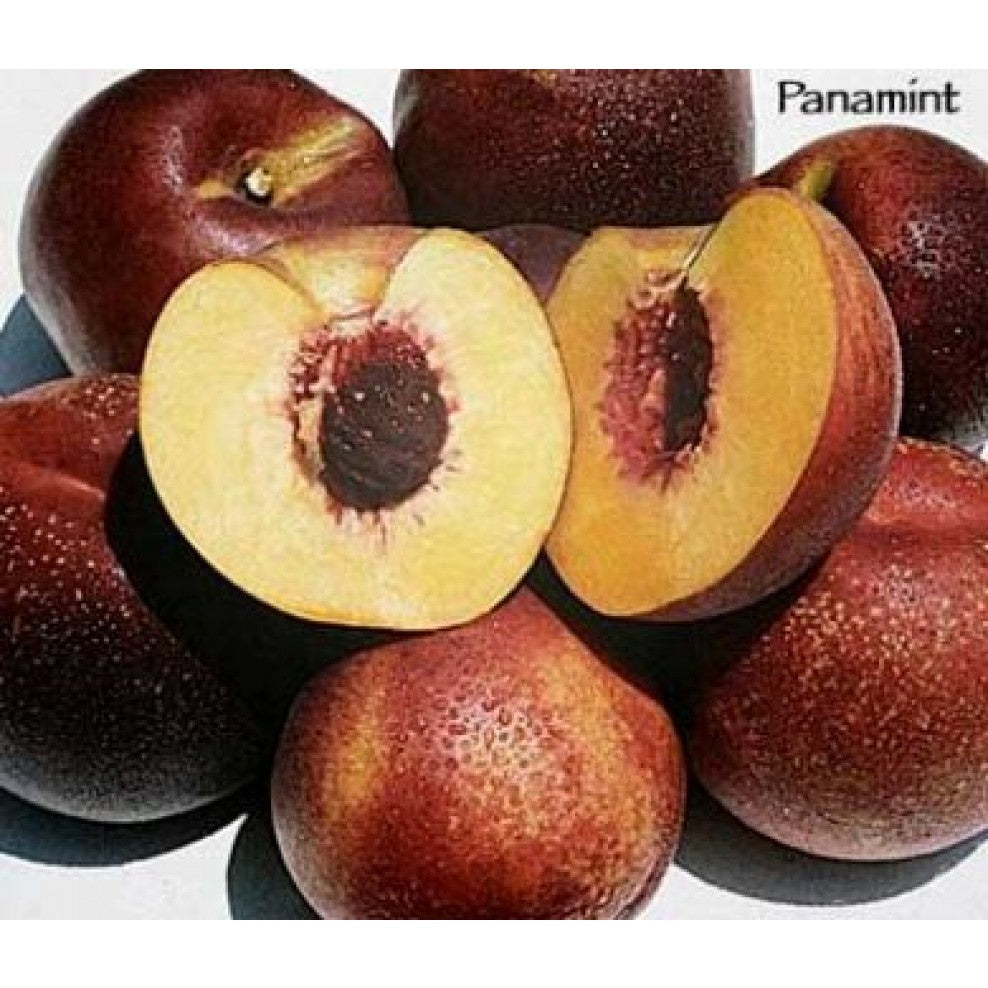
The Panamint nectarine tree is a horticultural treasure, gracing gardens with its attractive red-skinned yellow freestone fruit. Beyond its captivating appearance, these nectarines boast an intense flavor profile, showcasing a harmonious balance of acidity and sweetness that delights the senses. Highly favored in warm winter Southern California climates, this dependable and self-fruitful tree rewards enthusiasts with a bountiful harvest from late July to early August. With a moderate winter chilling requirement of 250 hours, it adapts well to various growing conditions, making it an excellent addition to any garden or orchard.
Panamint Nectarine Tree Fruits Description:
Panamint nectarines captivate with their alluring red-skinned exterior, hinting at the luscious yellow freestone flesh within. The fruits emit an enticing aroma, drawing fruit enthusiasts near. Upon tasting, their intense flavor delights the palate, combining delightful acidity with a natural sweetness. This perfect balance elevates them to a culinary gem, ideal for enjoying fresh, adding a burst of flavor to salads, creating sumptuous desserts, and crafting mouthwatering jams and preserves.
Panamint Nectarine Tree Description:
The Panamint nectarine tree showcases its natural splendor throughout the seasons. In Spring, it adorns itself with vibrant and fragrant flowers, attracting pollinators to ensure a fruitful harvest. The tree's canopy of lush green leaves adds visual charm, providing a welcome shade in warmer months. Its well-established root system ensures stability and efficient nutrient absorption, contributing to the tree's vigor and productivity. Additionally, the smooth bark enhances the overall appeal of this exquisite tree.
Uses:
The Panamint nectarine is a versatile fruit with a myriad of delightful uses. When harvested at the peak of ripeness, they are a delectable and healthy snack that satisfies the sweet tooth. These nectarines are perfect for adding a burst of flavor and vibrant color to fruit salads and smoothies, elevating their appeal to both the eyes and taste buds. Their intense flavor makes them a favored choice for creating mouthwatering desserts, such as cobblers, pies, and tarts. Additionally, the Panamint nectarines' natural sweetness and acidity make them an excellent candidate for crafting homemade jams and preserves, therefore preserving their deliciousness for enjoyment all year round.
History:
Nectarines were originally hailed from China around 6000 BC. Thereafter, they journeyed across continents, spreading from West Asia to Greece and Rome. They've captivated the taste buds of ancient civilizations. As centuries passed, they found their way to northern Europe and England, with devoted growers by the sixteenth century. Then, the Spanish explorers' endeavors introduced nectarines to the United States. They flourished in California's sunny climate, thus now leading to their esteemed place in American agriculture.
Step One:
Soil and Planting: Plant in soil that drains well. Dig a hole that is as deep as the tree’s roots and at least twice as wide.
Step Two:
Place the tree in the hole and backfill around the plant’s roots with a mixture of the native soil and high-quality planting mix that has washed sand and organic fertilizer.
Step Three:
Create a basin around the roots drip zone so that water collects. Water deeply until the roots and nearby soil is saturated and reaches field capacity.