

Get notified
Flordahome Pear Tree
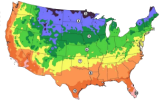
The Flordahome Pear Tree (Pyrus) is a hardy, low-chill pear variety well-suited for warm climates such as Southern California, Texas, and Florida. Unlike many pears that require long, cold winters, the Flordahome thrives in regions with mild winters, making it a reliable choice for backyard orchards. This tree produces abundant crops of crisp, juicy pears and offers year-round landscape beauty with its lush green foliage.
Climate & Growing Conditions
The Flordahome Pear Tree requires only 150–200 chill hours, allowing it to bear fruit in areas where traditional pears cannot. It performs best when planted in full sun but can also tolerate partial shade. Choose a location with well-draining soil, and use a high-quality planting mix when establishing your tree.
Size, Pruning & Spacing
With proper care, the Flordahome Pear Tree can reach 10–15 feet tall and spread up to 10 feet wide. To keep the tree manageable and highly productive, prune annually:
-
Trim in winter to maintain height under 10 feet.
-
Cut the tip of the leader branch to encourage strong side branching.
-
Remove crossing branches or those growing inward where light cannot reach.
-
Clear out dry twigs or shoots below the main branches and graft union.
Watering
Flordahome Pear Trees thrive with deep, infrequent watering:
-
Water weekly once the tree leafs out in spring.
-
Increase watering to 2–3 times per week in summer heat, especially in sandy soils.
-
Reduce watering in fall as temperatures cool.
-
Discontinue watering in winter while the tree is dormant.
Fertilizing
Feed your Flordahome Pear Tree with balanced, high-quality fertilizers to support both growth and fruiting:
-
Winter: Apply organic conditioners like bone meal, humus, and low-nitrogen fertilizers with higher phosphorus and potassium (NPK 1-2-2 or 1-4-4) to encourage blossoms and fruit set.
-
Early Spring: Use higher-nitrogen feeds (such as composted manure, blood meal, or fertilizers with NPK 2-1-1 or 3-1-2) to promote strong growth through summer.
-
Summer: Continue nitrogen-rich feeding for healthy foliage and fruit development.
-
Fall: Do not fertilize, as new growth at this time will be weak and susceptible to damage.
Blossoms & Fruit
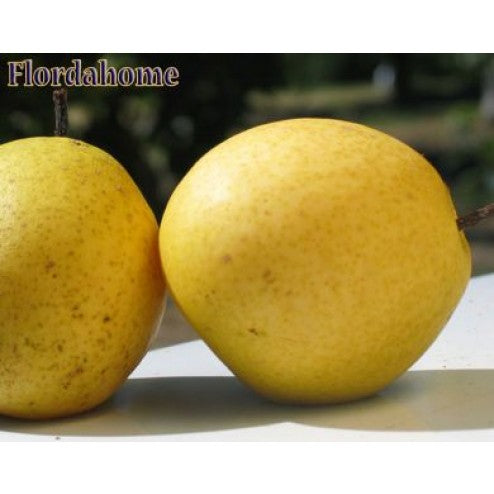
In spring, the Flordahome Pear Tree is covered with clusters of tiny white blossoms that attract pollinators and enhance the landscape. By summer, the tree produces crisp, pomaceous fruit with classic pear flavor. The pears are excellent for fresh eating, canning, and desserts.
Pest Management
Keep your Flordahome Pear Tree healthy and productive by managing pests organically:
-
Apply horticultural oils (such as neem oil) in winter to reduce overwintering pests.
-
Monitor regularly for soft-bodied insects in spring, treating promptly if needed.
Step One:
Soil and Planting: Plant in soil that drains well. Dig a hole that is as deep as the tree’s roots and at least twice as wide.
Step Two:
Place the tree in the hole and backfill around the plant’s roots with a mixture of the native soil and high-quality planting mix that has washed sand and organic fertilizer.
Step Three:
Create a basin around the roots drip zone so that water collects. Water deeply until the roots and nearby soil is saturated and reaches field capacity.