

Your Zipcode:
- - - - -
LOCAL
NON LOCAL
Your Hardiness Zone:
- -
Get notified
Plant Description
Planting
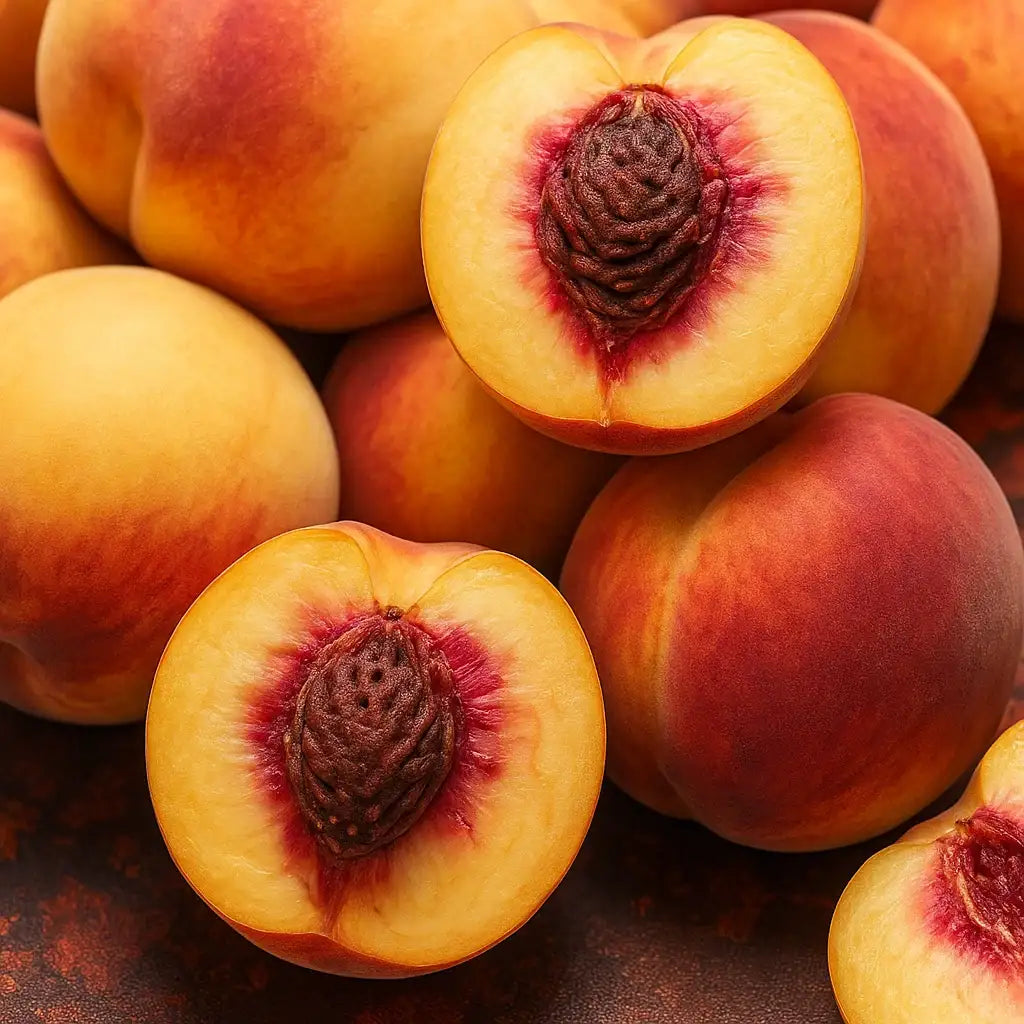
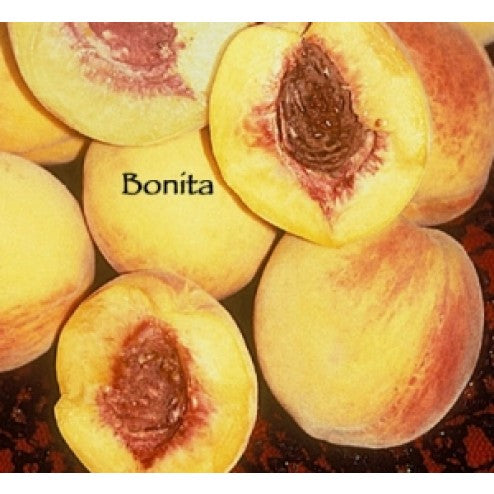
The Bonita Peach tree is a woody, deciduous tree with long green leaves. It is easy to grow and available in Dwarf, Semi-Dwarf, and Standard forms, making it suitable for different garden sizes.
Sun Exposure and Size
- Sunlight: Plant the peach tree in full sun for optimal growth and fruit production.
- Size: The tree can grow between 15 to 20 feet tall but can be pruned to stay between 8 to 15 feet tall. If you prefer a wider tree, allow for more space when planting.
- Spacing: When planting multiple trees, space them 8-10 feet apart. Provide more space if you want the tree to grow wider.
Watering Instructions
- Spring: Water new trees regularly, about 1-2 times per week during the spring growing season.
- Summer: Increase watering to 2-3 times per week during the hot summer months.
- Fall: As the weather cools, reduce irrigation to once per week.
- Winter Dormancy: Discontinue watering entirely during the winter when the tree is dormant.
Fertilization
- Spring Fertilization: Apply a balanced organic fertilizer with a 1-1-1 or 2-1-1 NPK ratio (e.g., 5-5-5 or 6-3-3) in the spring to promote growth.
- Summer Fertilization: Reapply a growth formula fertilizer during the summer.
- Fall Fertilization: Avoid fertilizing in the fall to prevent weak growth. Instead, use a fertilizer with low nitrogen and higher phosphorus and potassium (e.g., 4-12-12 NPK ratio) to strengthen the tree for the next growing season.
- Additional Fertilization: In cooler climates, manure can be applied in winter for added nutrients.
Pruning
- Winter Pruning: Prune the tree in winter while dormant. Cut the tip to prevent it from growing too tall and remove side branches that are crossing inward.
- Summer Thinning: Thin the tree during the summer to remove dry twigs, water sprouts, and excess fruits. This directs energy toward fruit production and overall tree health.
Pest Management
- Winter Pest Control: Use dormant fruit tree spray or horticultural oil in the winter to manage pests.
- Animal Protection: Use an animal repellant and cover the tree with netting to protect the fruit during harvest season.
Step One:
Soil and Planting: Plant in soil that drains well. Dig a hole that is as deep as the tree’s roots and at least twice as wide.
Step Two:
Place the tree in the hole and backfill around the plant’s roots with a mixture of the native soil and high-quality planting mix that has washed sand and organic fertilizer.
Step Three:
Create a basin around the roots drip zone so that water collects. Water deeply until the roots and nearby soil is saturated and reaches field capacity.