

Get notified
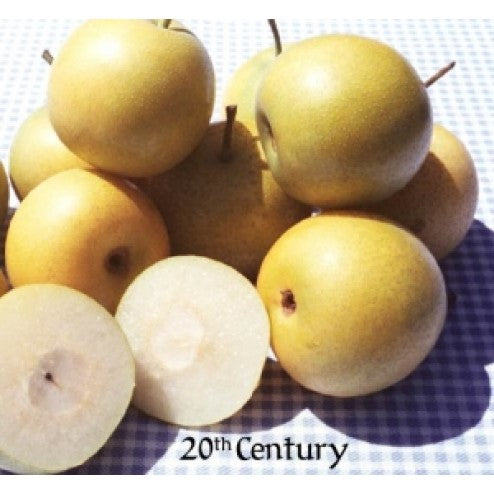
20th Century Asian Pear Tree
The 20th Century Asian Pear Tree is a deciduous fruit tree admired for its beautiful heart-shaped leaves and abundant harvests of crisp, juicy pears. Known for its ease of growth and reliable production, this tree is available in Dwarf, Semi-Dwarf, and Standard forms, making it a versatile choice for home orchards and landscapes.
Sun Exposure and Size
-
Sunlight: Plant in full sun for optimal fruit production and healthy growth.
-
Mature Size: Can grow up to 20 feet tall, but can be maintained at 10–15 feet with regular pruning.
-
Spacing: Plant trees 8–10 feet apart for a compact form, or more if you prefer a wider canopy spread.
Watering, Fertilizing, and Pruning Instructions
Watering
-
Spring: Water deeply but not too frequently; young trees need 1–2 times per week.
-
Summer: Increase watering to 2–3 times per week during hot weather.
-
Fall: Reduce watering to once per week as temperatures cool.
-
Winter: Stop watering while the tree is dormant.
Fertilization
-
Spring: Apply a balanced organic fruit tree fertilizer with a 1-1-1 or 2-1-1 NPK ratio (e.g., 5-5-5 or 6-3-3). In cooler climates, you can also apply well-aged manure.
-
Summer: Reapply a balanced growth formula fertilizer to support continued development.
-
Fall: Avoid fertilizing in fall. If needed, use a low-nitrogen fertilizer with a 1-2-2 or 1-4-4 ratio (e.g., 4-12-12) to prepare the tree for dormancy.
Pruning
-
Winter Pruning: Prune during dormancy to control height and remove inward-growing or crossing branches.
-
Summer Thinning: Thin excess fruits, water sprouts, and weak twigs to encourage larger, healthier fruit production.
Pear Pest Management
-
Winter Protection: Apply dormant fruit tree spray or horticultural oil to prevent overwintering pests.
-
Growing Season: Use animal repellents or netting to protect ripening fruit from birds and wildlife.
Characteristics of the 20th Century Asian Pear Tree
-
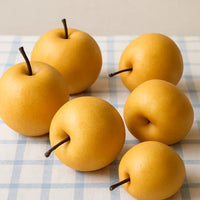
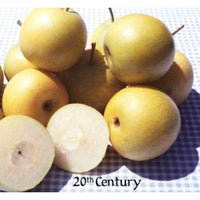
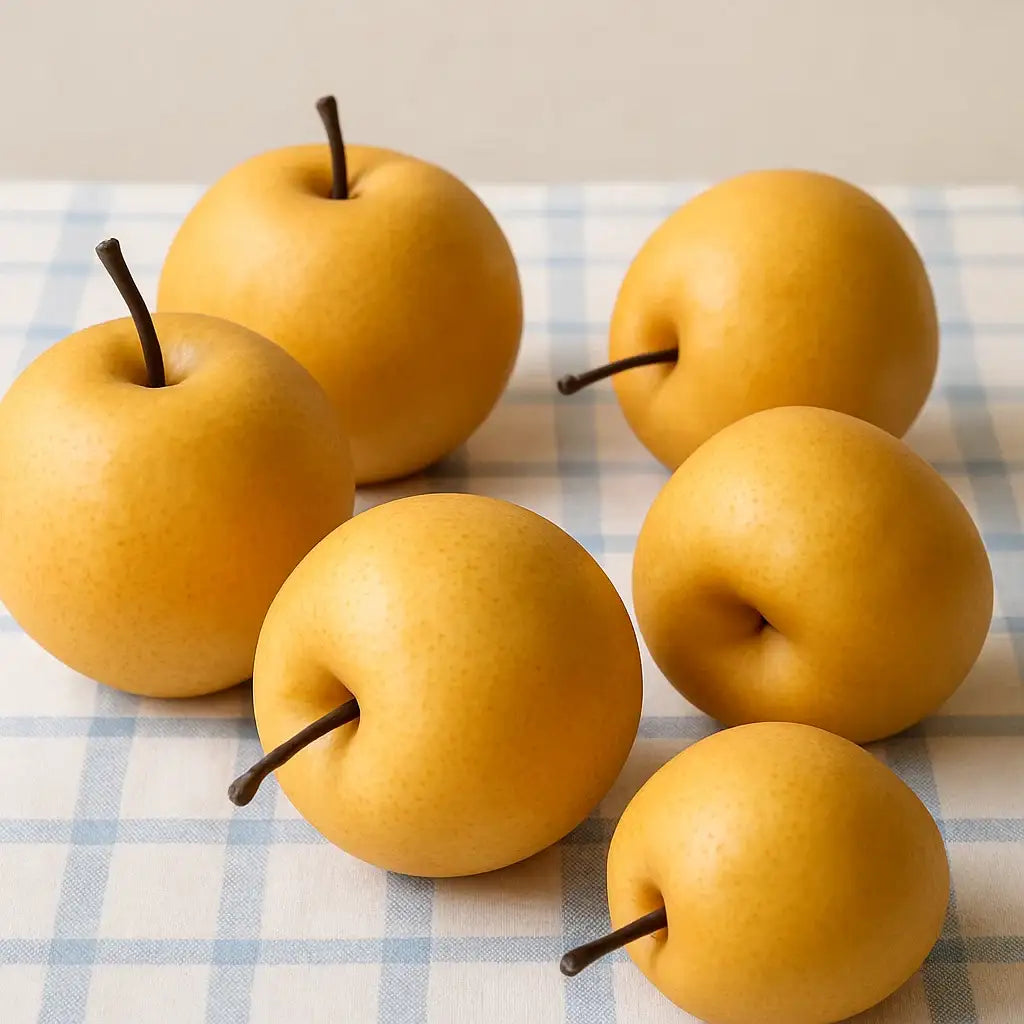
Fruit: Yellow skin with a translucent appearance, crisp and juicy texture.
-
Bloom Color: White blossoms in spring.
-
Fruit Size: Medium to large.
-
Harvest Time: Late August.
-
Sun Exposure: Requires full sun.
-
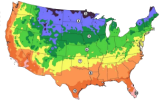
USDA Zone Range: Thrives in Zones 4–10.
Step One:
Soil and Planting: Plant in soil that drains well. Dig a hole that is as deep as the tree’s roots and at least twice as wide.
Step Two:
Place the tree in the hole and backfill around the plant’s roots with a mixture of the native soil and high-quality planting mix that has washed sand and organic fertilizer.
Step Three:
Create a basin around the roots drip zone so that water collects. Water deeply until the roots and nearby soil is saturated and reaches field capacity.