


Get notified
Spice Zee Nectaplum Tree Information and Care
Plant the Spice Zee Nectaplum tree in the full sun or part shade. As a relatively small tree, space as little as 10 feet apart. Provide more space for trees intended to grow wide or for more space between trees.
As a deciduous tree, do not provide supplemental water in the Winter while dormant. Start watering regularly in the Spring once the tree leafs out. Most newly planted trees need water once per week, then increase the frequency to twice per week once the weather becomes hot in the Summer. Fall bring lower temperatures, thus a reduction in water frequency. Reduce frequency until water is discontinued in the Winter.
Fertilize nectaplum trees with organic fruit tree fertilizers such as bone meal, blood meal, humus, and manure. Provide manure and higher phosphorus and potassium fertilizers like bone meal in the Winter before Spring growth along with manure. Apply higher nitrogen fertilizers like blood meal and other granular fertilizers in the Spring and Summer growing season.
Prune to maintain size and structure in the Winter while the tree is dormant. Thin trees of dry branches, too many fruits, and suckers in the Summer.
Use organic horticultural oils in the Winter to prevent soft-bodied insects during the growing season. Use repellents and cover your trees with netting when the fruit ripens to keep birds and rodents from your harvest.
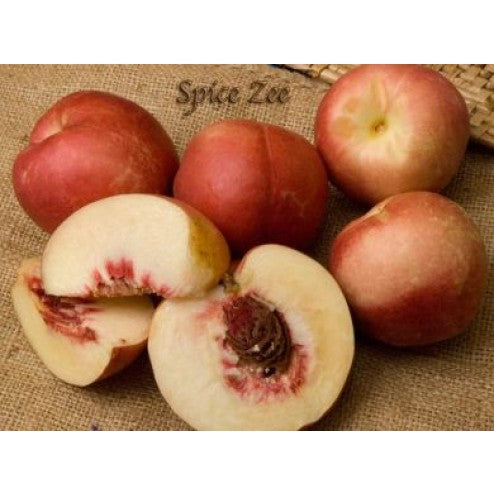
As a nectarine dominant tree, the nectaplum has a hard "stone" in the center of the fruit. The flesh is white with red color near the pit. The fruit size and shape prominently display feature of plum. A lovely and unique flavor and a great choice for the home orchard. Trees produce many fruits quickly. Plant a nectaplum with your other stone fruit and enjoy plentiful harvests and unique fruits for years to come.
Step One:
Soil and Planting: Plant in soil that drains well. Dig a hole that is as deep as the tree’s roots and at least twice as wide.
Step Two:
Place the tree in the hole and backfill around the plant’s roots with a mixture of the native soil and high-quality planting mix that has washed sand and organic fertilizer.
Step Three:
Create a basin around the roots drip zone so that water collects. Water deeply until the roots and nearby soil is saturated and reaches field capacity.