




Get notified
Santa Rosa Plum Tree Information and Care
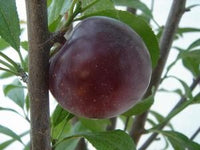
The Santa Rosa plum tree is small to moderate size. Although a plum tree can grow up to 2o feet tall, many homeowners prune to keep them between 8-12 feet tall and wide. Plant in the full sun and in soil that drains well. Use high-quality planting mix. Space trees 10-20 feet apart in depending on how large trees are intended to be grown. Santa Rosa plum trees have simple tiny green leaves that are smooth.
Water and Fertilizer
As a winter deciduous plant, the plum tree becomes dormant in the winter and do not need supplemental watering. Discontinue irrigation during the winter. Begin to water once the plum tree leafs out in the Spring. Usually once per week of deep water is good until it becomes warmer. Increase the frequency to 2-3 times per week when it's hot.
Fertilize with organic fruit tree fertilizer during the Spring to Summer growing seasons. Use flower, bloom, and fruit fertilizers with more phosphorus and potassium but little nitrogen in the winter to promote Spring blossoms. There many types of fertilizer. Popular Organic fertilizers high in phosphorus and potassium can be humus based or bone meal. Manure and blood meal fertilizers are high in nitrogen.
Harvest and Pest Management
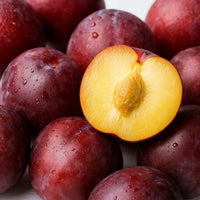
Fruits are ripe in the Summer. Cover your tree with birds and animal netting to protect fruits from animals. Using repellents and covering fruits or the whole tree are very effective measures. Also, keep the area clean, remove fallen and ripe fruit, and possibly harvest early and store fruit indoors.
Use organic dormant sprays known as horticultural oils such as Neem oil in the Winter. These prevent soft-bodied insects from becoming a problem in the Spring.
Pruning and Thinning
Plum trees should be pruned in the Winter while dormant to maintain height and form. Remove any suckers, dry twigs, or crossing branches. Top the tips of long branches to promote lateral growth from that branch. Remove growth towards the center of the tree or in the center where little light will reach.
Thin your tree in the Simmer to direct growth and remove any growth that would waste the tree's energy. Remove excessive fruit to prevent broken limbs and small fruit. Use white water-based paint on the tree's trunk to prevent sunburn.
Step One:
Soil and Planting: Plant in soil that drains well. Dig a hole that is as deep as the tree’s roots and at least twice as wide.
Step Two:
Place the tree in the hole and backfill around the plant’s roots with a mixture of the native soil and high-quality planting mix that has washed sand and organic fertilizer.
Step Three:
Create a basin around the roots drip zone so that water collects. Water deeply until the roots and nearby soil is saturated and reaches field capacity.