

Get notified
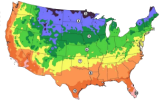
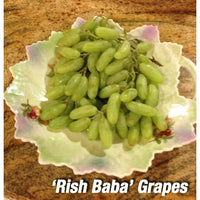
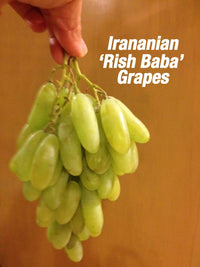
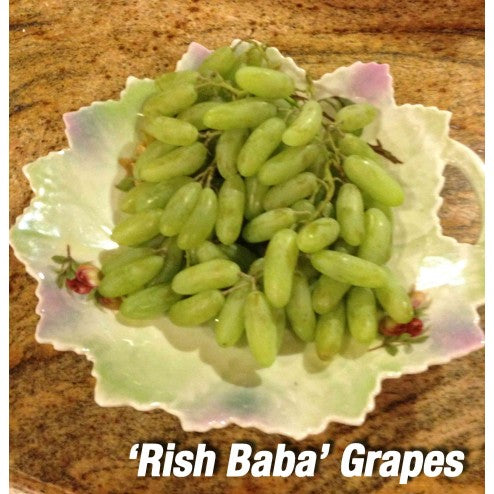
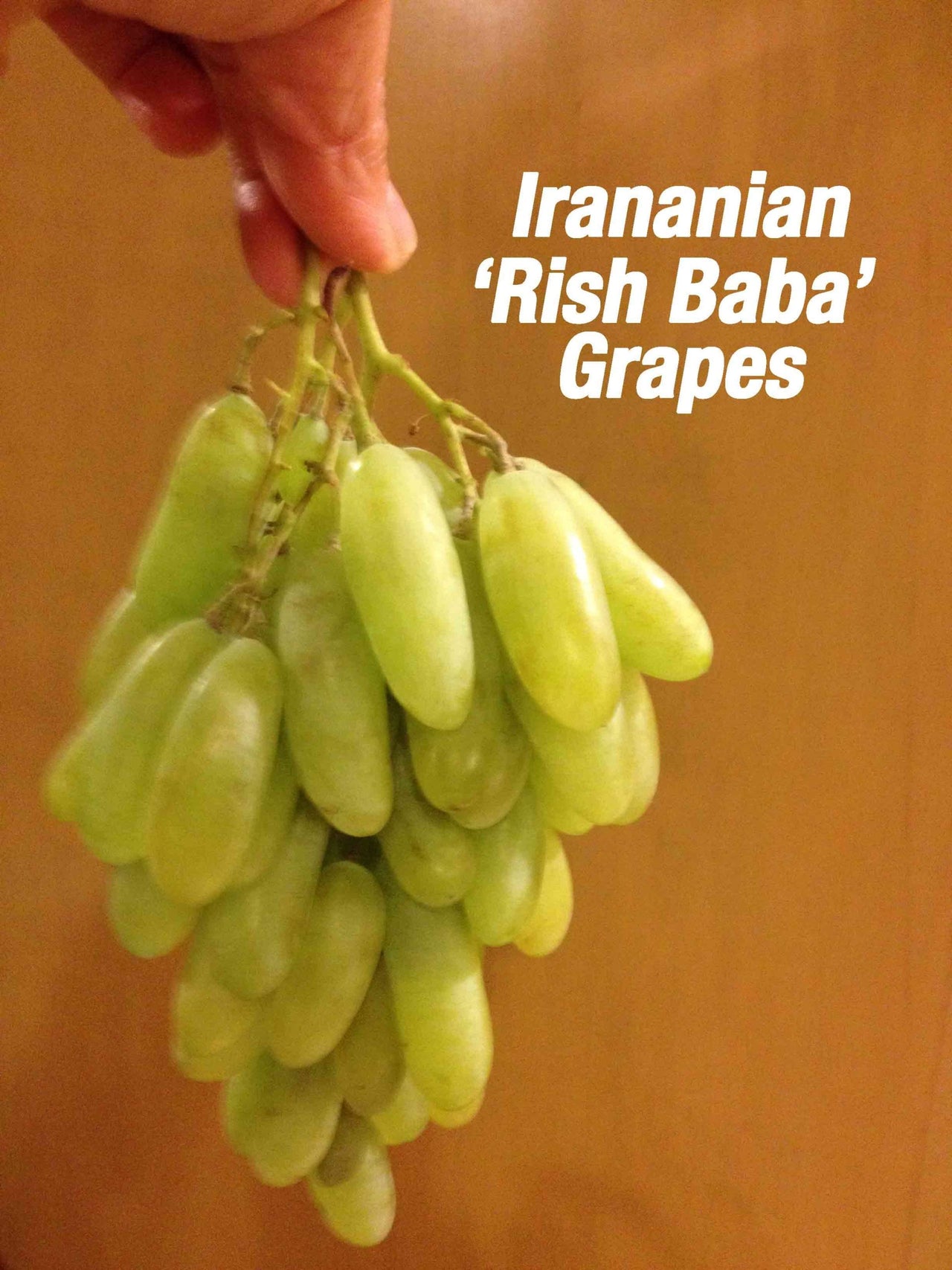
Persian grape Rish Baba vines have a wide variety of uses. The fruit can be eaten fresh or dried as a sweet snack that stores well for long-term use. Unripe Persian grapes, known as ghooreh, are commonly used in Persian cooking. Additionally, the leaves are perfect for making dolma (dol-meh). This easy-to-grow vine is well-suited for low chill, mild winter climates.
Planting and Growing Instructions
- Sunlight: Plant the Persian grape vine in full sun for optimal growth.
- Support Structures: As a deciduous vine, it can be trained on a trellis, wall, arbor, or post to support the plant and help it grow upward.
Watering, Pruning, and Fertilizing the Grape Vine
Watering Instructions
- Winter Dormancy: Do not provide supplemental water during the winter while the vine is dormant.
- Spring and Summer: Begin watering once the vine leafs out in the spring. Water about once per week and increase to 2-3 times per week during hot summer months.
- Fall: As temperatures cool, reduce watering frequency to prevent overwatering. Ensure soil is not consistently wet to avoid fungal diseases like Powdery Mildew and Rust.
Pruning Instructions
- Winter Pruning: Prune the vine during winter dormancy to prepare for spring growth. This promotes healthy new growth and improves fruit yield.
Fertilization Instructions
- Soil Preparation: Till the top layer of soil in winter and apply manure and organic fertilizers before spring growth.
- Spring Fertilization: In the spring, apply a balanced organic fertilizer with a 1-1-1 or 2-1-1 NPK ratio (e.g., 5-5-5 or 6-3-3).
- Summer Fertilization: Reapply growth formula fertilizer during summer.
- Fall Fertilization: Avoid fertilizing in the fall when the plant's growth slows down. If needed, apply a low-nitrogen, high-phosphorus, and potassium fertilizer with a 1-2-2 or 1-4-4 NPK ratio (e.g., 4-12-12).
Fungus Prevention and Treatment
- Fungus Risk: Grape vines are susceptible to fungal diseases such as Powdery Mildew and Rust, particularly if the soil remains too wet.
- Fungicide Use: To prevent or treat fungal issues, apply organic fungicides like Liqui-Cop or horticultural Neem oil.
Step One:
Soil and Planting: Plant in soil that drains well. Dig a hole that is as deep as the tree’s roots and at least twice as wide.
Step Two:
Place the tree in the hole and backfill around the plant’s roots with a mixture of the native soil and high-quality planting mix that has washed sand and organic fertilizer.
Step Three:
Create a basin around the roots drip zone so that water collects. Water deeply until the roots and nearby soil is saturated and reaches field capacity.