






Get notified
Our Persian Pomegranate trees, originating from Saveh, are known for being easy to grow and requiring minimal maintenance. These trees remain dormant in winter, then leaf out in spring, producing beautiful red flower blossoms. To avoid premature blossom drop, it's important not to overwater during this period.
Watering Schedule
- Spring: Once young trees leaf out, water them about every 10 days in most areas. Increase the frequency to once per week as flowers develop into small fruit.
- Summer: During the hot summer months, increase watering to twice per week to support fruit development.
- Fall: As temperatures cool, reduce watering gradually, and discontinue completely during the winter dormancy period.
- Mature Trees: Large, mature trees can be watered as infrequently as every 2 weeks to once a month, depending on the weather and tree maturity. Persian Pomegranate trees are highly drought-tolerant and require minimal watering.
Planting and Growing Conditions
- Sunlight: Plant pomegranate trees in full sun for optimal growth and fruit production.
- Soil: Ensure the soil is well-draining to prevent root issues.
- Spacing: For creating a privacy hedge, trees can be planted as close as 6 feet apart. For more space, plant trees 10 feet apart or more.
Fruit Ripening and Harvesting
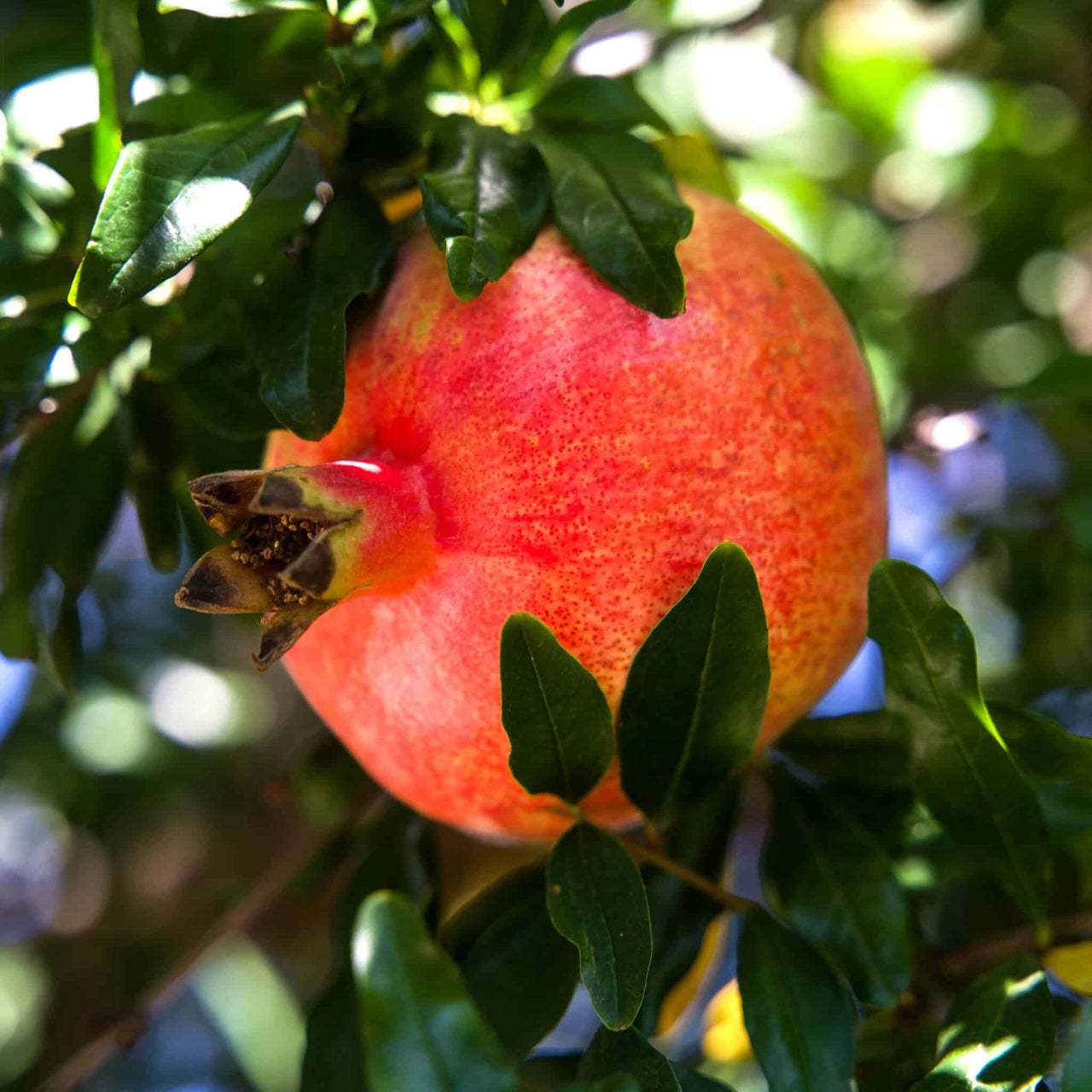
- Ripening Time: In most areas, the fruits tend to ripen in the fall.
- Ripeness Indicators: The size, color, and texture of the fruit will help indicate ripeness. The size may vary based on the quantity of fruit; thinning smaller fruit can allow remaining pomegranates to grow larger.
Aesthetic and Landscape Use
Pomegranates have a droopy and dense form with beautiful red flowers and fruits, providing year-round interest in the garden. They are excellent for adding color to corners of landscapes and work well as focal points in Mediterranean garden designs. Over time, pomegranate trees can grow quite large, making them ideal for use as a statement tree or hedge.
Popularity and Benefits
In California, Persian Pomegranates have gained popularity due to their health benefits and easy care. These trees require little water and minimal maintenance, making them a perfect addition to drought-prone areas or low-maintenance gardens.
Step One:
Soil and Planting: Plant in soil that drains well. Dig a hole that is as deep as the tree’s roots and at least twice as wide.
Step Two:
Place the tree in the hole and backfill around the plant’s roots with a mixture of the native soil and high-quality planting mix that has washed sand and organic fertilizer.
Step Three:
Create a basin around the roots drip zone so that water collects. Water deeply until the roots and nearby soil is saturated and reaches field capacity.