


Get notified
Li Jujube Tree Care and Information
The Li Jujube tree, commonly referred to as the "Chinese date," is the most popular variety of jujube. Its fruits are larger than the Lang variety and offer a sweet, chewy texture when fully ripe. The tree thrives in hot climates, displaying excellent drought resistance, hardiness, and natural resilience to pests and diseases. It requires minimal care and is self-fruitful, making it an ideal choice for USDA Zones 5-10.
Care
- Sunlight: Full sun is ideal for optimal growth and fruit production.
- Soil: Prefers well-draining soil; it can tolerate a variety of soil types, including sandy or loamy soils.
- Watering: Water deeply once a week during the growing season. Reduce watering during dormancy.
- Pruning: Prune the tree in late winter or early spring to remove dead branches and improve airflow.
- Fertilization: Apply a balanced fertilizer in the early spring to support healthy growth and fruit production.
- Pest and Disease Resistance: Naturally resistant to most pests and diseases, making it a low-maintenance tree.
Li Jujube Tree Fruit Description
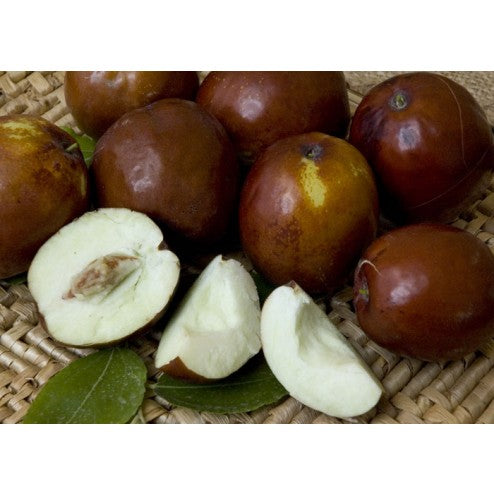
The Li Jujube tree produces round-shaped fruits that are larger than the Lang variety. As they ripen in early fall, the fruits turn a rich reddish-brown color and become dry and wrinkled when fully mature. Their sweet, chewy texture is similar to dates, making them a popular snack or ingredient for various culinary uses, including desserts and preserves.
Li Jujube Tree Description
The Li Jujube tree is a visually appealing tree that adds charm to any landscape. In the spring, it produces small, fragrant flowers that enhance its beauty. The tree’s deciduous leaves form a lush, green canopy, contributing to its ornamental value. The robust root system ensures the tree remains stable and efficiently absorbs nutrients, while the smooth bark adds to its overall aesthetic appeal.
Uses
The Li Jujube fruit is versatile and can be enjoyed fresh or dried. Its sweet flavor makes it ideal for snacking, while dried jujubes are perfect for year-round use in cooking. The fruit is used in various culinary creations, including desserts, preserves, and even traditional medicinal remedies. Beyond its fruit, the tree’s ornamental value enhances gardens, parks, and other landscapes, offering both beauty and functionality.
History
The Li Jujube tree has its origins in China, where it has been cultivated for centuries. Over time, the tree's adaptability, minimal care requirements, and delicious fruit have made it the most favored jujube variety worldwide. Today, it is highly regarded for its fruit and as an ornamental tree, securing its place in gardens and orchards across the globe.
Step One:
Soil and Planting: Plant in soil that drains well. Dig a hole that is as deep as the tree’s roots and at least twice as wide.
Step Two:
Place the tree in the hole and backfill around the plant’s roots with a mixture of the native soil and high-quality planting mix that has washed sand and organic fertilizer.
Step Three:
Create a basin around the roots drip zone so that water collects. Water deeply until the roots and nearby soil is saturated and reaches field capacity.