

Get notified
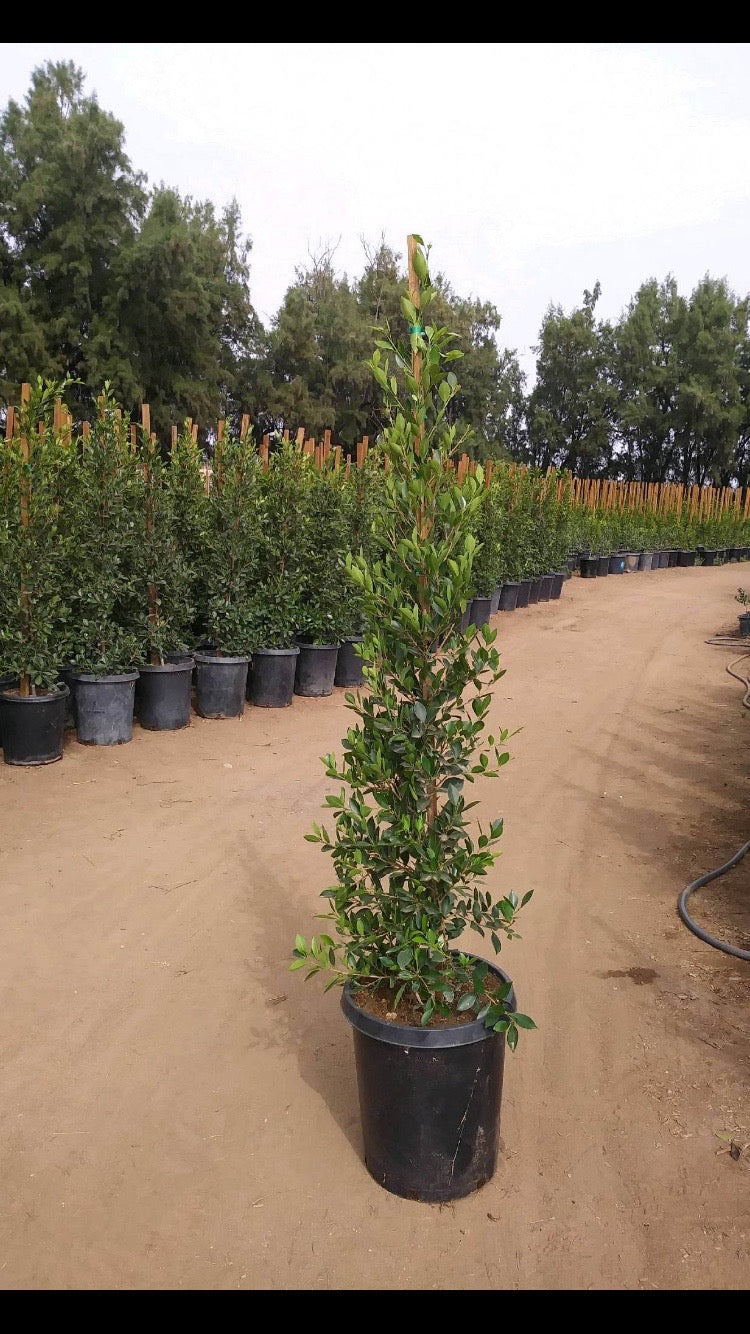
Ficus Nitida Column – Indian Laurel
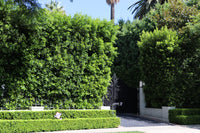
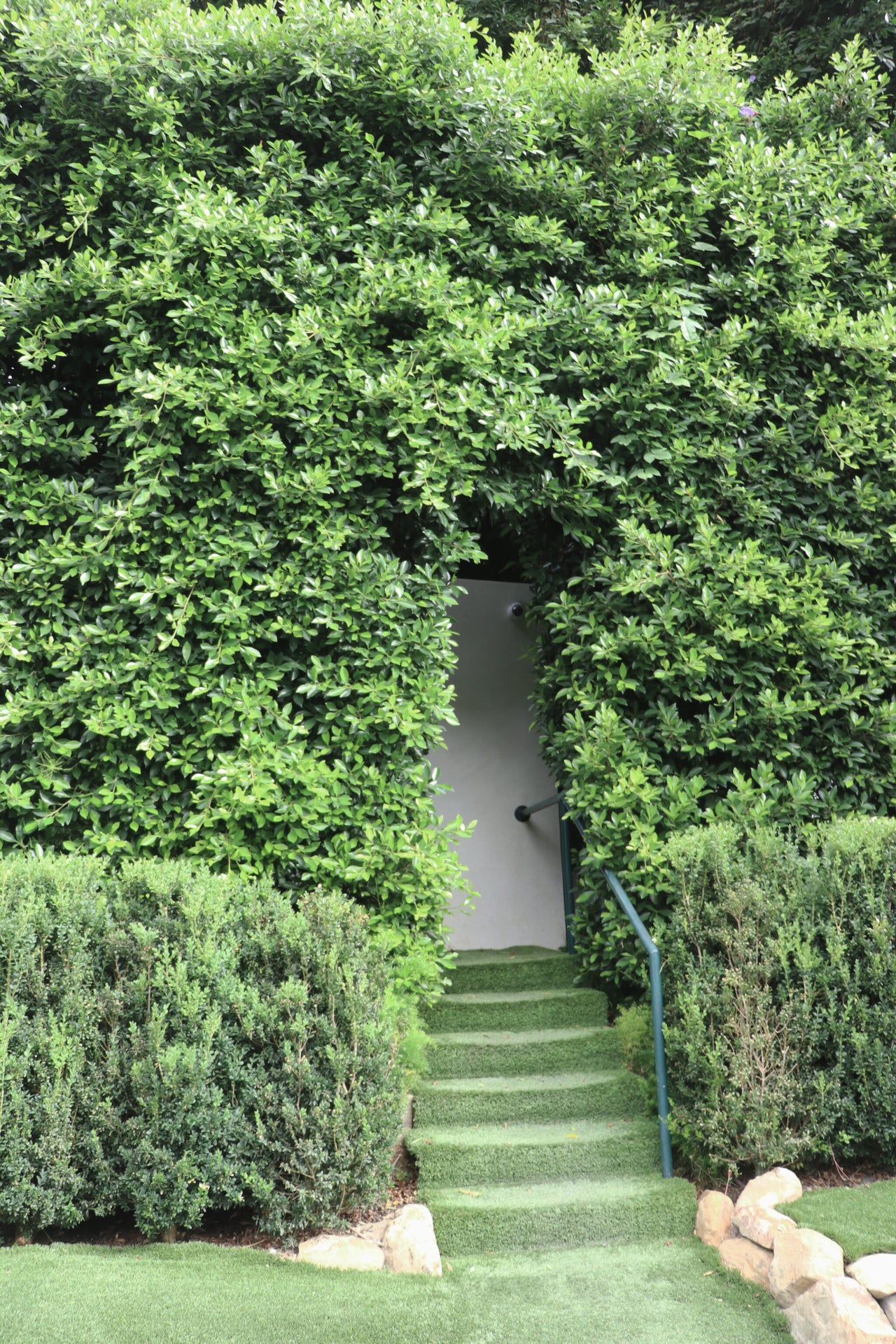
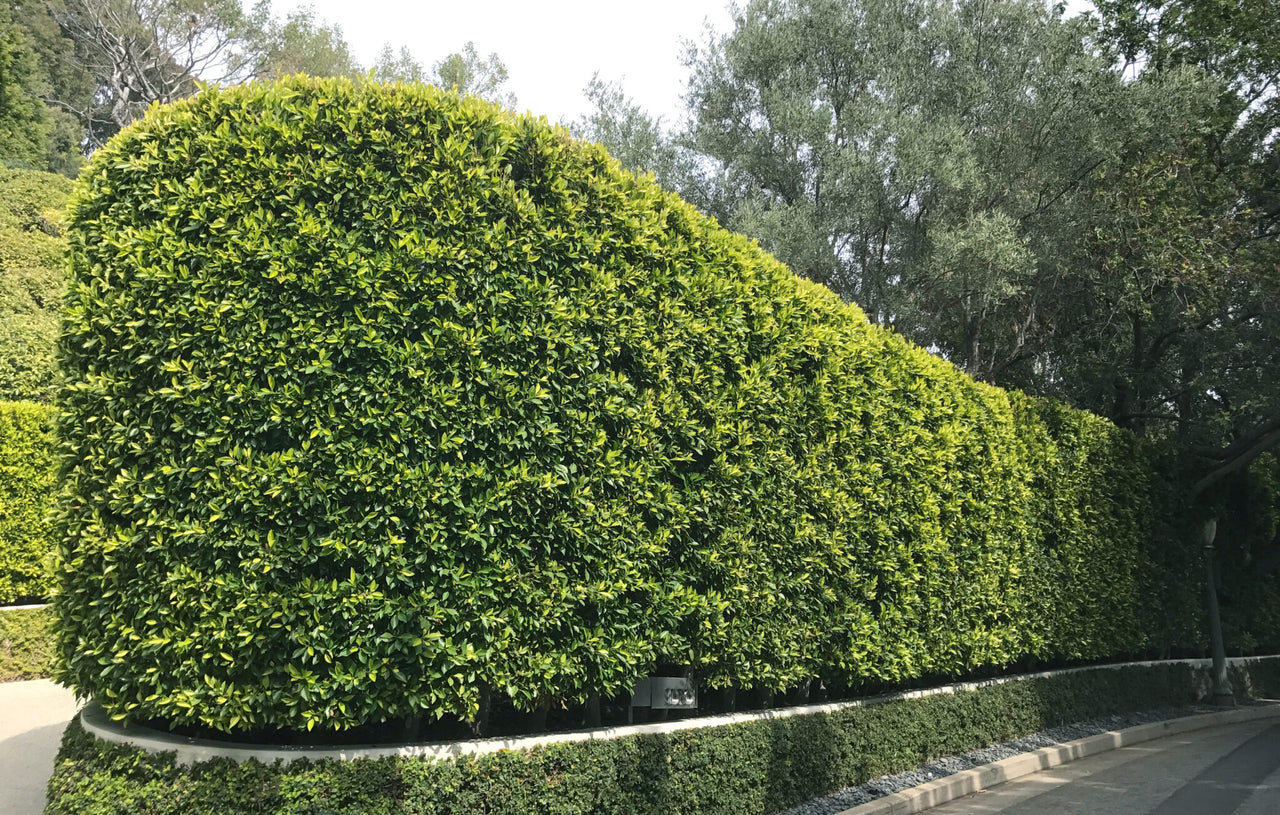
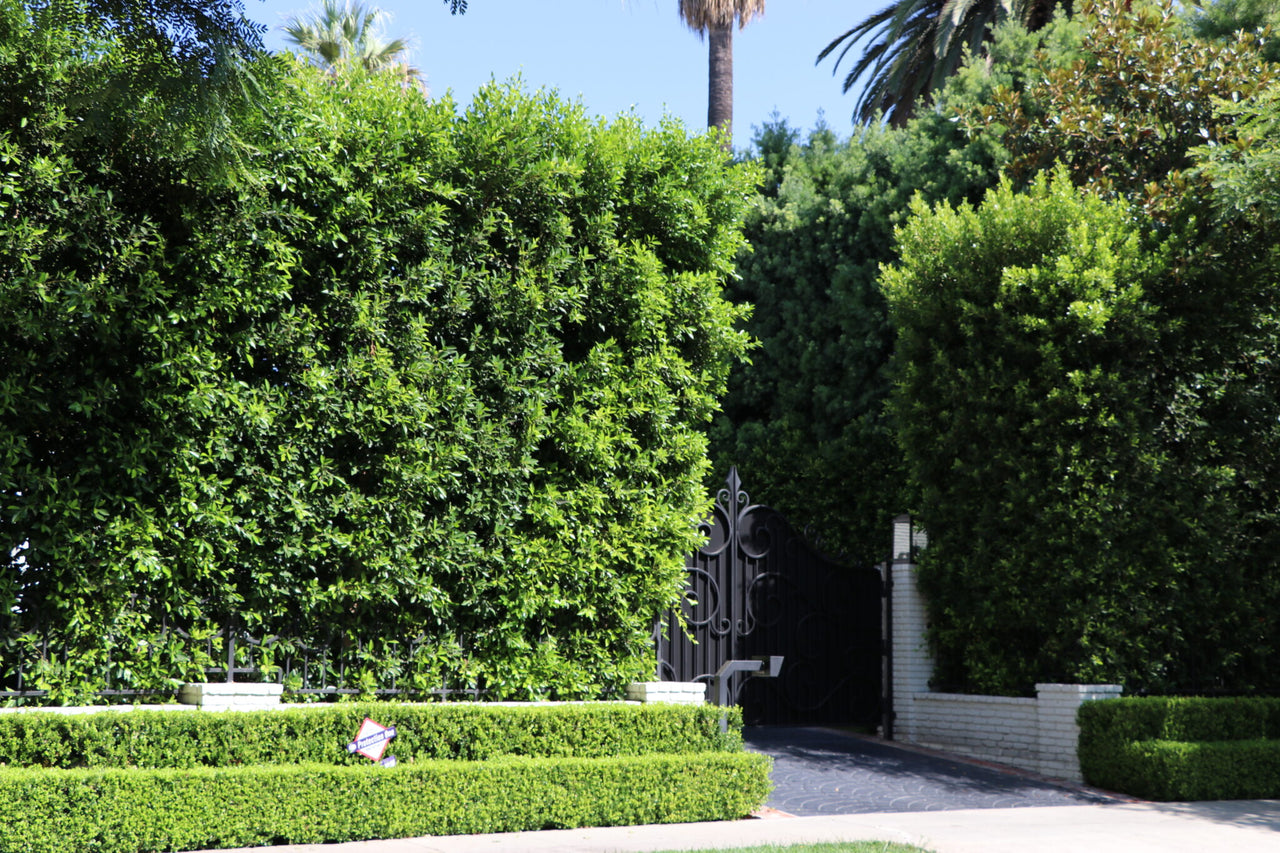
Plant them 2 – 3 feet apart in a row to create a full privacy hedge. Use Ficus to block a view, create a border, or even reduce noise. Ficus have very aggressive root systems, which is why they grow so fast. Be careful when planting near a wall or pavement, as they can cause damage over time. Although Ficus can grow over 30 feet tall, they are often kept much shorter, about 10- 15 feet tall.
The Ficus Nitida Column (Indian Laurel Column) is an elegant, fast-growing tree ideal for creating lush vertical accents and dense privacy screens, providing year-round greenery that maximizes space, making it an excellent choice for landscapes, hedges, and container planting.
Appearance & Growth Habit
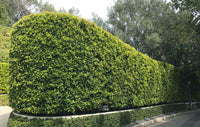
The Ficus nitida column reaches heights of 10 to 30 feet while maintaining a slender width of 3 to 5 feet. When planted in rows, the trees form a solid living wall of greenery. With regular pruning, they can be maintained at a smaller size to control shape and root spread.
Planting & Landscape Uses
-
Privacy Hedges: Plant 3 to 5 feet apart to create a seamless privacy hedge or windbreak. For the fastest privacy, choose the 25-gallon size.
-
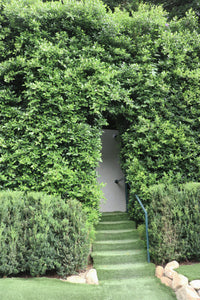
Vertical Accents: Use along driveways, property lines, or entrances
-
Container Planting: Patios, balconies, and smaller spaces (choose from our inventory of large containers).
Growing Conditions
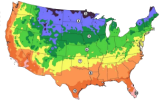
The Ficus Nitida Column thrives in warm, tropical, and Mediterranean climates, performing best in full sun but tolerating partial shade. It grows rapidly in mild, frost-free regions and may require protection in colder climates. Proper watering, well-drained soil, and occasional pruning ensure long-term health and structure.
Root Considerations
Like most Ficus species, the Ficus Nitida Column has invasive roots that can damage nearby concrete, walls, or underground systems if not managed properly. To avoid issues, consider installing a root barrier at the time of planting or maintaining the trees at a smaller size through pruning.
Alternative Option
For those concerned about root invasiveness, the Ligustrum Japonicum ‘Texanum’ (Wax Leaf Privet) is an excellent substitute. This evergreen shrub/tree offers similar dense, glossy foliage and is ideal for hedges and privacy screens, but without aggressive roots.
Available Sizes
-
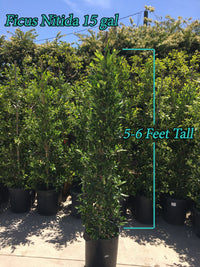
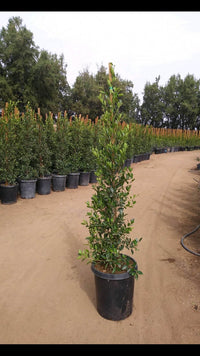
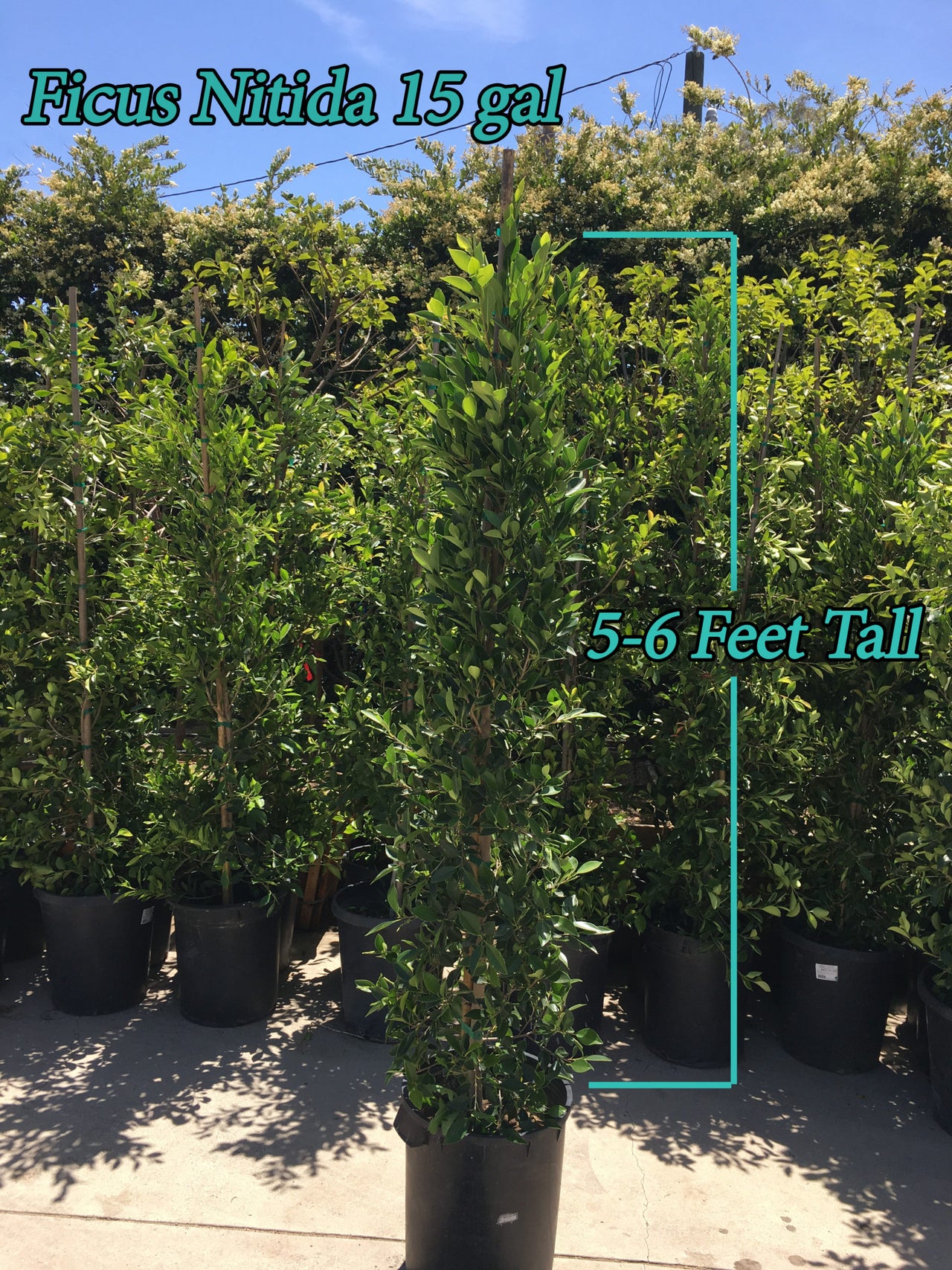
15 Gallon – Approximately 5 feet tall in columnar form at planting.
-
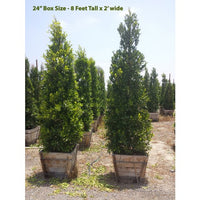
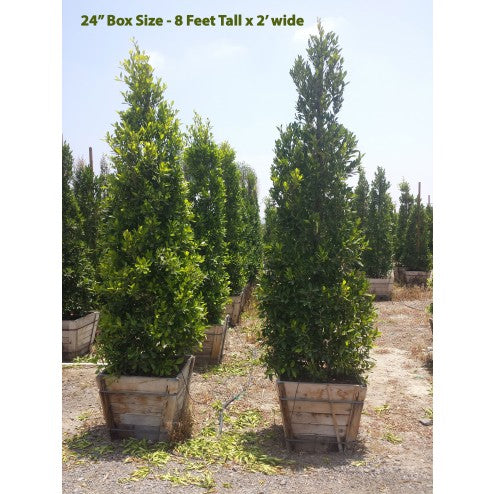
25 Gallon – Approximately 8.5 feet tall by 2 feet wide in columnar form at planting.
Step One:
Soil and Planting: Plant in soil that drains well. Dig a hole that is as deep as the tree’s roots and at least twice as wide.
Step Two:
Place the tree in the hole and backfill around the plant’s roots with a mixture of the native soil and high-quality planting mix that has washed sand and organic fertilizer.
Step Three:
Create a basin around the roots drip zone so that water collects. Water deeply until the roots and nearby soil is saturated and reaches field capacity.